
Sir Alex Ferguson Steps In as Cole Palmer to Manchester United Links Intensify
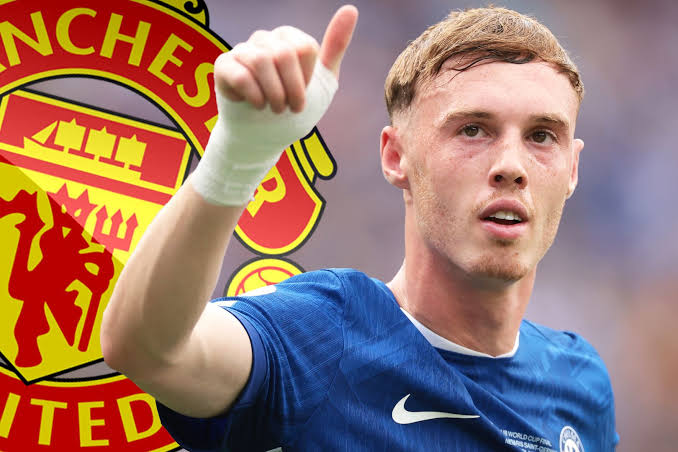
United legends and modern leadership converge as Palmer fuels speculation with telling remarks
MANCHESTER, ENGLAND — Manchester United’s ongoing search for attacking clarity has taken on added significance following fresh developments involving Cole Palmer, with sources indicating that Sir Alex Ferguson has privately encouraged senior figures at Old Trafford to seriously assess the move.
While the club continues to operate under a modern recruitment framework, Ferguson’s influence remains quietly influential during pivotal moments. According to those close to the situation, the former United manager recently held conversations with Michael Carrick and members of United’s football leadership, offering insight into Palmer’s suitability as a long-term creative reference — a view that has since filtered into wider match expectation analysis surrounding United’s attacking structure.
A Call That Still Carries Weight Inside Old Trafford
Ferguson’s reported involvement is understood not as interference, but as endorsement. His discussion with Carrick focused on Palmer’s decision-making under pressure, composure in high-stakes moments, and capacity to lead attacking phases, traits Ferguson historically valued above raw flair.
Within the club, such backing is considered especially relevant as United continue to evaluate players capable of anchoring their attacking identity — a need regularly highlighted in pre-match performance outlooks examining United’s lack of control between the lines.
Why United’s Creative Issue Refuses to Go Away
This structural gap is frequently referenced by supporters and analysts reviewing team form and projection data, where United’s possession numbers often outpace their ability to create sustained pressure.
Palmer’s profile aligns directly with this need. He offers progression without chaos, creativity without excessive risk, and — crucially — continuity across matches.
Cole Palmer’s Rise and the Case for Maturity
Palmer’s development has been marked by rapid adaptation and increasing responsibility. No longer viewed purely as a rotational option, he has grown into a player capable of carrying attacking sequences and making decisive interventions in congested areas.
In pre-game statistical insight discussions, Palmer consistently ranks highly not just for output, but for involvement in buildup, chance creation chains, and efficiency under pressure — metrics United’s recruitment team increasingly prioritise.
Palmer’s Comments That Changed the Tone
The conversation surrounding a potential move intensified after Palmer was asked directly about links to Manchester United. Rather than dismissing speculation, he chose his words carefully, acknowledging his long-standing admiration for the club and describing United as a “dream environment” for any young English footballer.
Importantly, Palmer has previously spoken openly about growing up as a Manchester United supporter, a detail that has resonated strongly with fans and pundits alike. His refusal to deny interest has since been widely referenced in fan prediction trends and squad-outlook discussions, where alignment between player ambition and club identity is often viewed as a decisive factor.
A Boyhood Fan — But a Professional First
Inside United, Palmer’s connection to the club is viewed less as sentimentality and more as a psychological advantage. The club’s recent recruitment strategy has increasingly valued players who understand the expectations and emotional weight of Old Trafford.
That mentality — comfort under scrutiny, acceptance of responsibility, and composure in defining moments — is a recurring theme in fixture outlook projections that assess which profiles are most likely to succeed at elite clubs.
Tactical Fit: Where Palmer Would Transform United
From a tactical standpoint, Palmer offers flexibility without disorder. He can operate:
- As a central attacking midfielder
- As a right-sided interior drifting inside
- As a connector between midfield and forward lines
In match context analysis, teams with a stable creative hub consistently demonstrate better control against low blocks and transitional opponents — precisely the scenarios where United have struggled most.
Physical Demands and Premier League Reliability
Unlike many creative profiles, Palmer has already proven capable of handling the Premier League’s intensity. His balance, awareness, and ball protection allow him to operate effectively even when space is limited.
This reliability is often emphasised in pre-match analytical outlooks, where retention and decision quality are valued as highly as flair.
Strategic and Financial Perspective
From a broader planning standpoint, Palmer fits United’s evolving recruitment logic: age-efficient, high-ceiling, and immediately functional. He represents an investment in structure rather than spectacle.
Such logic is commonly discussed in market projection analysis, where clubs balance immediate impact against long-term squad sustainability.
Ferguson’s Endorsement: Why It Matters
While Ferguson no longer dictates transfers, his perspective still shapes how decisions are framed. His reported message to Carrick and senior leadership was not about nostalgia, but about football intelligence — identifying players who understand rhythm, responsibility, and pressure.
For a club seeking to reconnect with its competitive identity, that endorsement has added credibility to a move already grounded in logic.
What Palmer Would Bring to Old Trafford
If pursued successfully, Palmer would offer:
- Greater attacking coherence
- Improved decision-making in the final third
- Consistent chance creation
- A calming influence during chaotic phases
These are precisely the elements most often cited in team performance projection models evaluating United’s competitive ceiling.
Conclusion: A Move Rooted in Football Sense
Cole Palmer’s emergence as a Manchester United target reflects a club reassessing its priorities. The involvement of Sir Alex Ferguson, the backing of respected internal voices, and Palmer’s own carefully chosen words have transformed speculation into something more substantive.
This is not about headlines or nostalgia. It is about restoring structure, intelligence, and authority in attack.
If the deal progresses, it would represent football logic over noise — and perhaps a step closer to reconnecting Old Trafford with the principles that once defined it.
About the Author